Vermont Rental Lease Agreement Forms
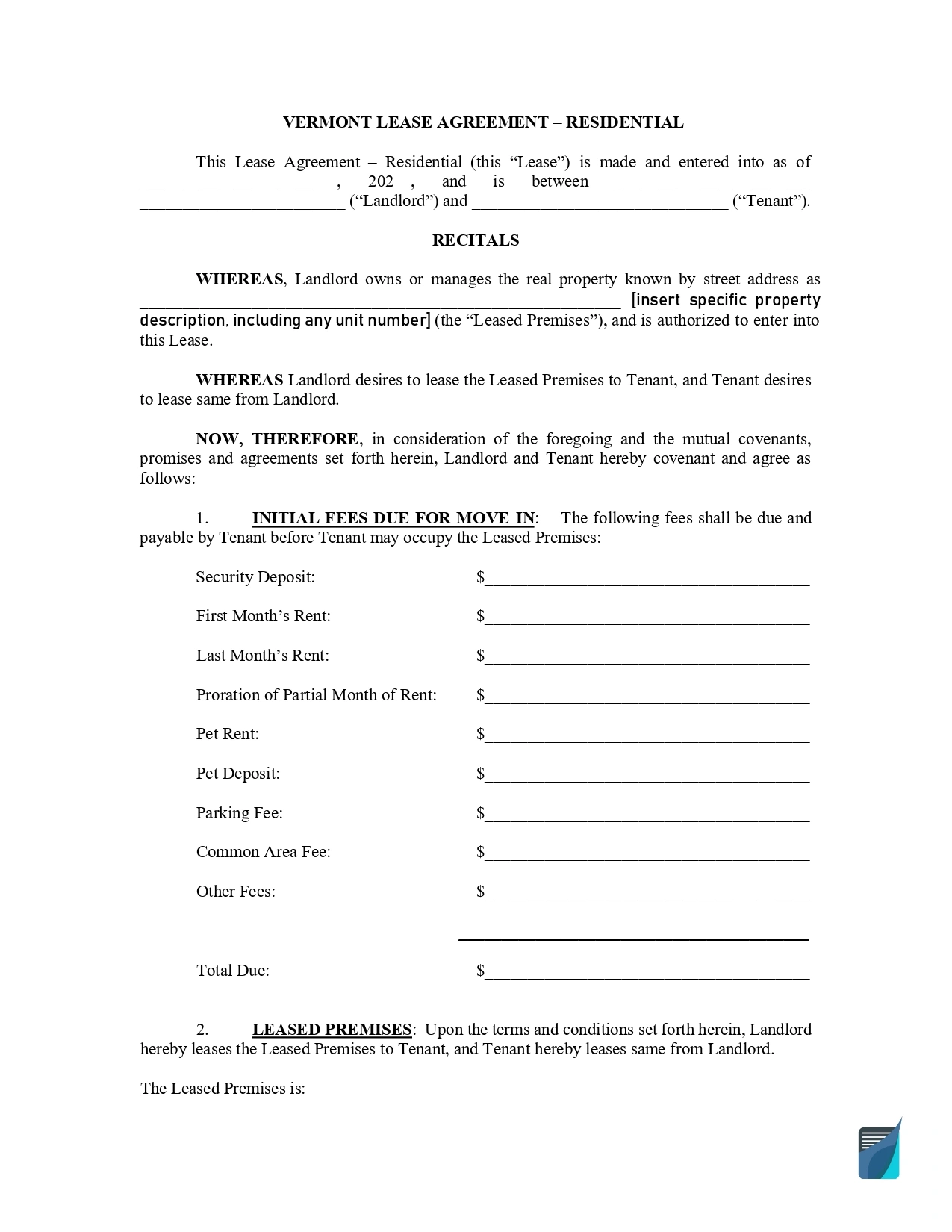
The Vermont rental lease agreement form is a legally binding document establishing the terms and conditions under which a tenant may occupy and use a landlord’s property. This form outlines the specifics of the tenancy, including the duration of the lease, the amount of rent, the payment schedule, and any other stipulations agreed upon.
The Vermont lease agreement is essential for maintaining a smooth landlord-tenant relationship. It also provides a reference point that helps prevent misunderstandings and manage expectations. Importantly, this document must comply with Vermont housing and rental laws, so using our rental agreement templates is the best idea.
Build Your Document
Answer a few simple questions to make your document in minutes
Save and Print
Save progress and finish on any device, download and print anytime
Sign and Use
Your valid, lawyer-approved document is ready
Requirements for Security Deposit
State regulations regarding residential rental agreements can be found in Title 9, Chapter 137 of the Vermont Statutes Annotated.
Security Deposits
In Vermont, a security deposit serves as a financial guarantee that tenants will fulfill their obligations regarding rent and property maintenance as specified under 9 V.S.A. § 4461. This deposit is to be returned to the tenant upon the tenancy’s termination or expiration, assuming all lease conditions are met. The landlord can use the deposit to cover various potential costs, which might include:
- Nonpayment of rent.
- Property damage beyond normal wear and tear.
- Unpaid utility or other charges due directly to the landlord.
- Costs to remove abandoned items from the rental unit.
If deductions are necessary, Vermont law mandates that landlords provide a written statement detailing these along with the remainder of the deposit. This statement must be delivered to the tenant within 14 days of vacating the property, provided the landlord was notified before the move-out date. For seasonal rentals, the period extends to 60 days.
The law specifically handles the security deposit and the consequences for non-compliance. Should a landlord fail to return the deposit or provide the itemized list within the 14-day window, they forfeit the right to retain any part of the deposit. Moreover, if this failure is found to be willful, the landlord may be liable for double the amount improperly withheld, in addition to reasonable attorney’s fees and costs.
Owner’s Access to Property
According to 9 V.S.A. § 4460, landlords must give tenants at least forty-eight hours’ notice before entering the property. This entry is permissible only for necessary maintenance or emergency repairs and must occur during reasonable hours — specifically, between 9 a.m. and 9pm This regulation ensures that tenants are adequately informed and can plan accordingly while allowing landlords access to perform essential upkeep.
Mandatory Disclosures
While Vermont state law does not require any specific disclosures within a leasing contract, federal law imposes certain obligations on landlords, especially concerning properties built before 1978. One critical federal requirement is the disclosure of potential lead-based paint hazards in older properties, as outlined in 42 U.S. Code § 4852d.
Landlords must provide tenants with an EPA-approved information pamphlet on identifying and managing lead-based paint hazards and include a form in the lease that discloses any known lead-based paint in the property.
Common Types of Lease Agreements in Vermont
In Vermont, lease agreements come in various forms to suit different rental needs:
- Standard lease agreement. This common form is usually for a fixed period, such as one year, and details rent, payment schedules, and rules regarding pets and subleasing.
- Month-to-month. This flexible lease continues monthly without a set end date. It can be terminated by the landlord or tenant with typically 30 days’ notice, making it ideal for those seeking short-term housing or flexible terms.
- Sublease. This option allows tenants to rent their leased space to another party. Obtaining landlord approval is important, as many standard leases restrict subletting.
- Commercial lease. These are used for business properties and are tailored to include provisions specific to commercial needs, such as renovations or professional equipment.
- Lease-to-own. Tenants can rent a property with an option to buy, often contributing a part of each rent payment towards the purchase price, providing a pathway to ownership.
All these agreements clearly outline the terms and conditions between landlords and tenants, ensuring that both parties understand their responsibilities and rights.
Vermont Rental Lease Agreement Form Details
| Document Name | Vermont Rental Lease Agreement Form |
| Other Names | VT Rental Lease, Vermont Residential Lease Agreement |
| Relevant Laws | Vermont Statutes Annotated, Title 9, Chapter 137 |
| Security Deposit Amount | Not specified |
| Security Deposit Return | Fourteen (14) days after the lease ends |
| Avg. Time to Fill Out | 18 minutes |
| # of Fillable Fields | 119 |
| Available Formats | Adobe PDF |

We provide a wide range of important Vermont documents to anyone in quest of convenience when handling various agreements, contracts, and other paperwork in the state.