

What Is a Bill of Sale?
A bill of sale is a simple legal document that essentially acts as a receipt or record of a transaction that took (or will take) place. It records that an item was passed from the ownership of one person (a seller) to another person or party (a buyer). It contains all of the necessary and appropriate information about the sale to serve as a legitimate record, including:
-
The date and time of the transaction.
-
The price paid for the item or service.
-
Warranty information if applicable.
-
Some specifications regarding the item or service (descriptions)
Both parties should fill out a bill of sale in a transaction, and both parties should retain a copy of the signed legal document for proof of purchase or payment. Bills of sale are designed to be used when the exchange of payment is made in full at the time of the purchase and when both parties agree to buy or sell the item in its current condition or "as-is."
A bill of sale might also be known as proof of payment, proof of purchase, proof of sale, sales receipt, or sales slip.
Bill of Sale Glossary
As-Is—defines the item or service described in the bill of sale as "sold or purchased in its current condition." In a legal sense, it means that the buyer was okay with any perceived defects or faults at the time of purchase and cannot use those faults as legal ammunition in a lawsuit after the fact. The as-is bill of sale also protects the seller from being forced to refund the buyer for any issues or defects, even if they are discovered after the fact.
Buyer—the purchaser of a service or item.
Seller—the person or party who gives up an item or service for purchase.
Gift—legally defined as giving something to a buyer without the expectation of compensation.
Payment—any legal tender used to pay for an item or service in a transaction.
Notary public—a third-party public officer without any stake in the transaction who can confirm the signatures' legitimacy for both the buyer and seller. Such individuals can be found at professional services or a local bank.
Trade-In—a transaction where a buyer offers an item to a seller for an item the seller owns. The buyer's item is perceived as equal to in value or at a slight discount compared to the seller's item. For example, motor vehicle owners may decide to "trade-in" their used car for a small discount on a new vehicle held by the seller.
VIN—a Vehicle Identification Number, a 17-character code of letters and numbers that serves as a unique piece of identifying information for a vehicle. A VIN must be included on a bill of sale form if the transaction concerns a car.
Bill of Sale Types
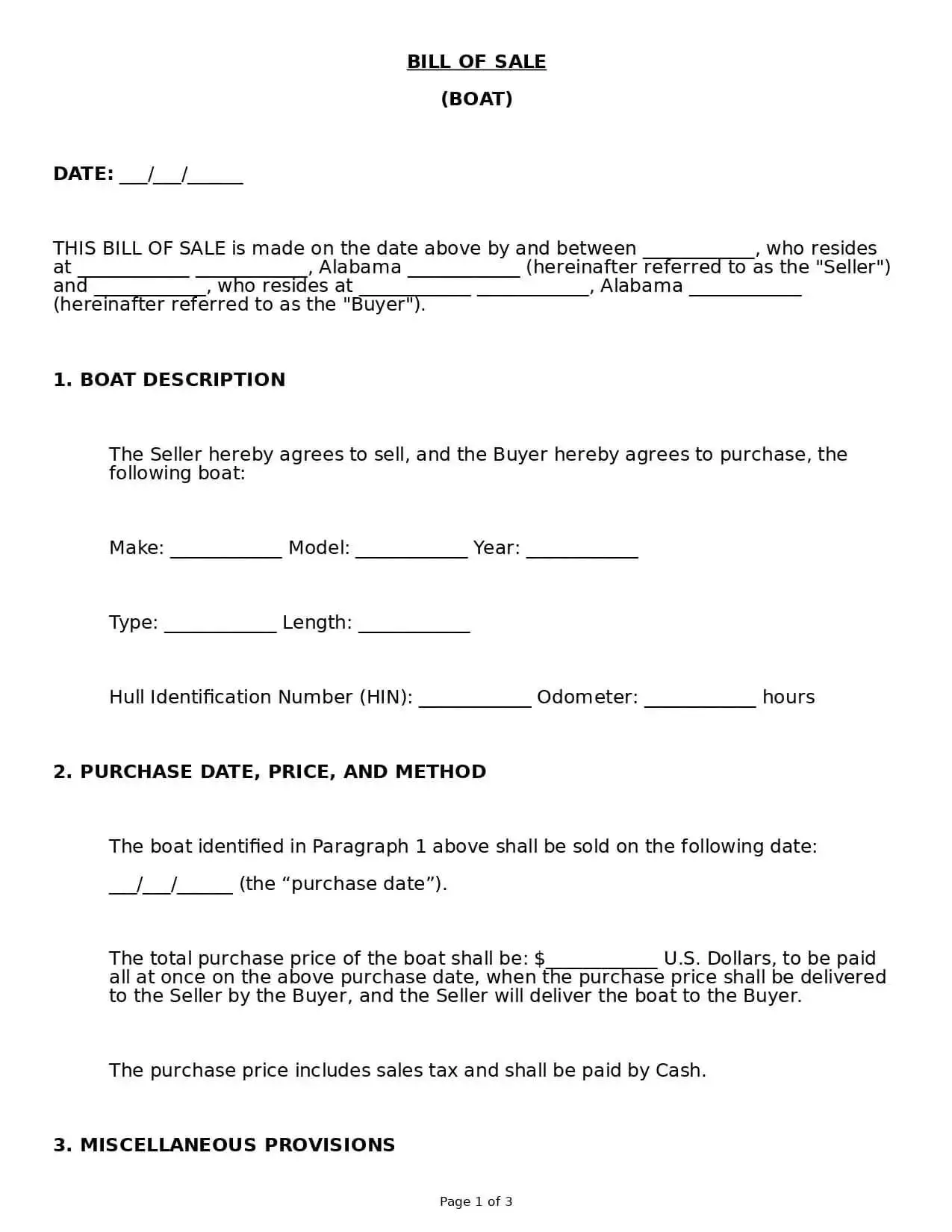
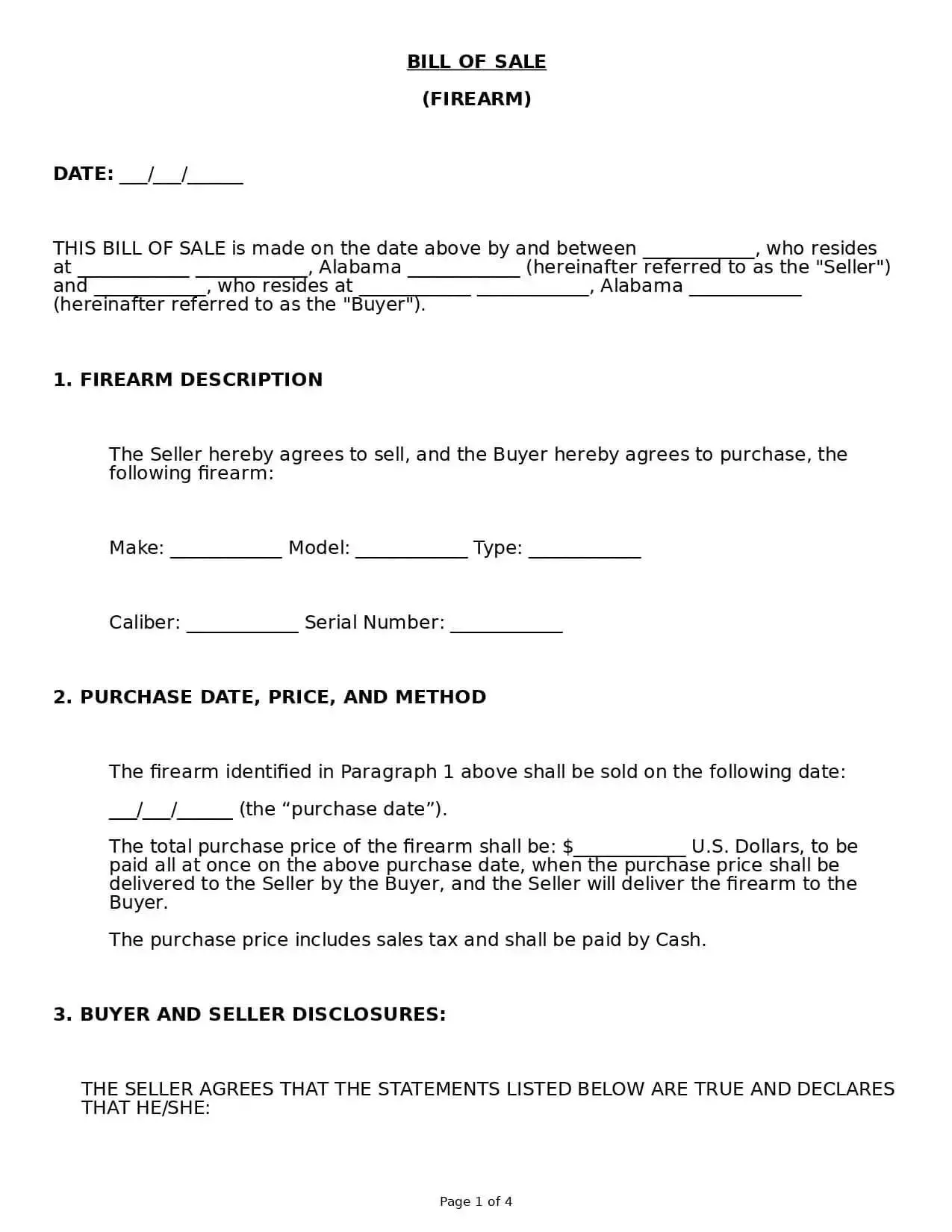
Bills of sale come in a wide variety of types depending on the transaction at issue. Most people use bills of sale for expensive items or pieces of property like cars. Automobile, motorcycle, RV, and boat bills of sale are incredibly common and usually include a VIN line for the vehicle being transferred. This is also partly because most states require you to use a bill of sale form to register your vehicle (at least if the transaction is for $500 or more).
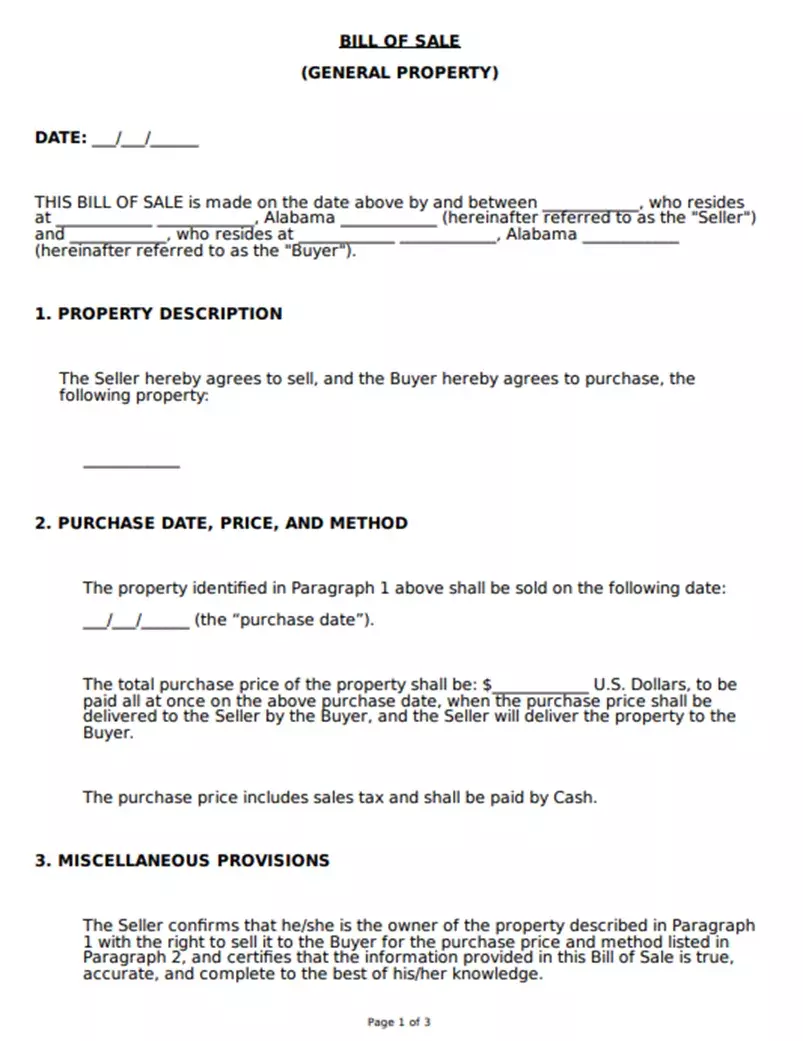
Others may use a bill of sale for aircraft or other watercraft types, costly ones like yachts. However, people can also use a bill of sale for cheaper items or property like furniture, tools, exercise equipment, appliances, and more.
Individuals may also use a bill of sale for transactions of other personal property. Bicycles, jewelry, and clothing can all be covered under a bill of sale form. Instead of a VIN line, they may have an additional line for a serial number or piece of identifying information attached to the asset in question.
A bill of sale may have more open lines for the description of what is being traded. For jewelry, for instance, the line may be filled in with the description of the object to identify it later.
You can use a bill of sale to transfer animals as well. Dogs, cats, other household pets, and larger or more expensive animals like horses can all be transferred using these documents.
In short, a bill of sale form can be used for whatever you like as long as it has space for all of the pertinent information and spots for the seller's signature.
Who Should Use a Bill of Sale?
A bill of sale should be used by anyone looking to buy or sell an asset of significant monetary worth, especially when they don't know the other participant very well (for instance, buying or selling online). Common situations for a bill of sale form include:
-
When buying or selling a new or used motor vehicle.
-
When buying or selling an item through a trade website like Craigslist.
-
When selling or purchasing any used electronic or high-value item.
-
When buying or selling an item with a strong likelihood to depreciate over the next few years.
-
When buying or selling an item when proof of ownership is required for insurance or registration (i.e., a vehicle or pet)
Note that the last instance still applies whenever there is a "gifting" of an item. If a parent were to gift a vehicle to their child, they would still need a bill of sale so that the child could prove their ownership of the vehicle for registration and insurance.
Frequently Asked Questions
Why do I have to use a bill of sale?
A bill of sale is necessary for transferring some property pieces (for example, expensive pieces like motor vehicles) to protect both the buyer and seller from legal abuse. Without a record of the transaction, one party could sue the other through slander or libel. Furthermore, a bill of sale is sometimes necessary for tax purposes. For instance, when a motor vehicle changes ownership, a bill of sale is needed to correctly assign tax and registration information to the new owner instead of still being applied to the previous owner.
What payment methods apply in a bill of sale?
You can use any payment method you wish so long as specified in the bill of sale. Most bill of sale documents record cash as the payment method, although others may use mobile or internet banking options like PayPal.
You can also use repeated payments for a vehicle bill of sale or a bill of sale form for any other item. The payment period and amount to be paid each period (such as how many dollars per month) must be specified in the corresponding section of the bill of sale.
Who keeps the bill of sale's original?
The buyer keeps the bill of sale's original copy, although the seller should also keep a copy for their records. The buyer holds the original bill of sale since the most basic of these documents only have space for the seller's signature.
What makes a bill of sale valid?
A bill of sale is valid as long as it fulfills all of your local jurisdiction agreements. This means that you should always check with your state requirements when composing a bill of sale to ensure that you include room for all necessary items. For instance, some jurisdictions require that both the buyer and seller sign the bill of sale, meaning that you need two signatures instead of just one. Some jurisdictions also require that witnesses be present for a bill of sale form completion.
Furthermore, a bill of sale for vehicles must have the VIN on the document in the correct space to be valid.
Lastly, the Certificate of Acknowledgement must be included and completed by a notary public for a bill of sale form to be valid.
Can I register a vehicle with a car bill of sales and no title?
Yes, although it depends on your jurisdiction. In Georgia, for example, you are allowed to register your vehicle as long as you have a bill of sale.
The state requirements will vary, but you can bring your printable bill of sale and other documentation to your local DMV in general. You will be sent a letter telling you the amount of your new vehicle's surety bond, which you will then buy from an insurance provider approved by the DMV. This bond makes sure that the motor vehicle doesn't have any problems or liens to let you be registered as the new owner.
After purchasing the surety bond, you may then apply for a bonded title, which will list you as the motor vehicle's legal owner.
 Marc D.
 Roberta W.
 James S.